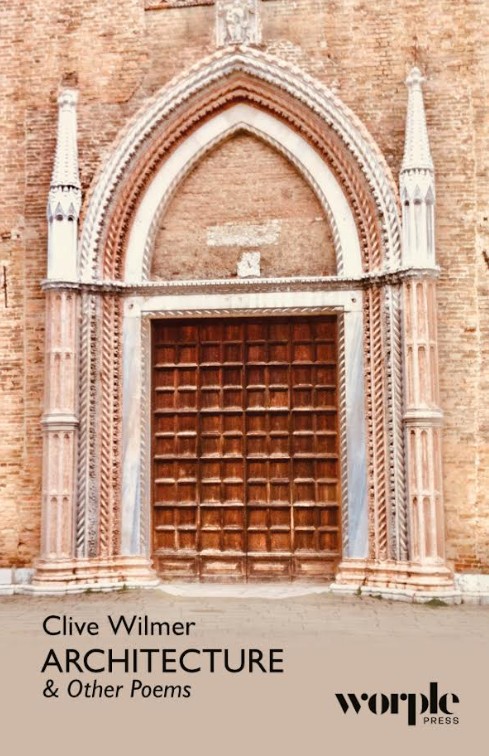
Clive Wilmer's final poems published
On March 15th 2026, at a memorial event hosted by Sidney Sussex College, friends, family, colleagues and students of former Guild Master Clive Wilmer gathered to celebrate the publication of his final poems, Architecture & Other Poems, by Worple Press. Below you can read what his great friend, the collection's editor & publisher Peter Carpenter, said during the evening.
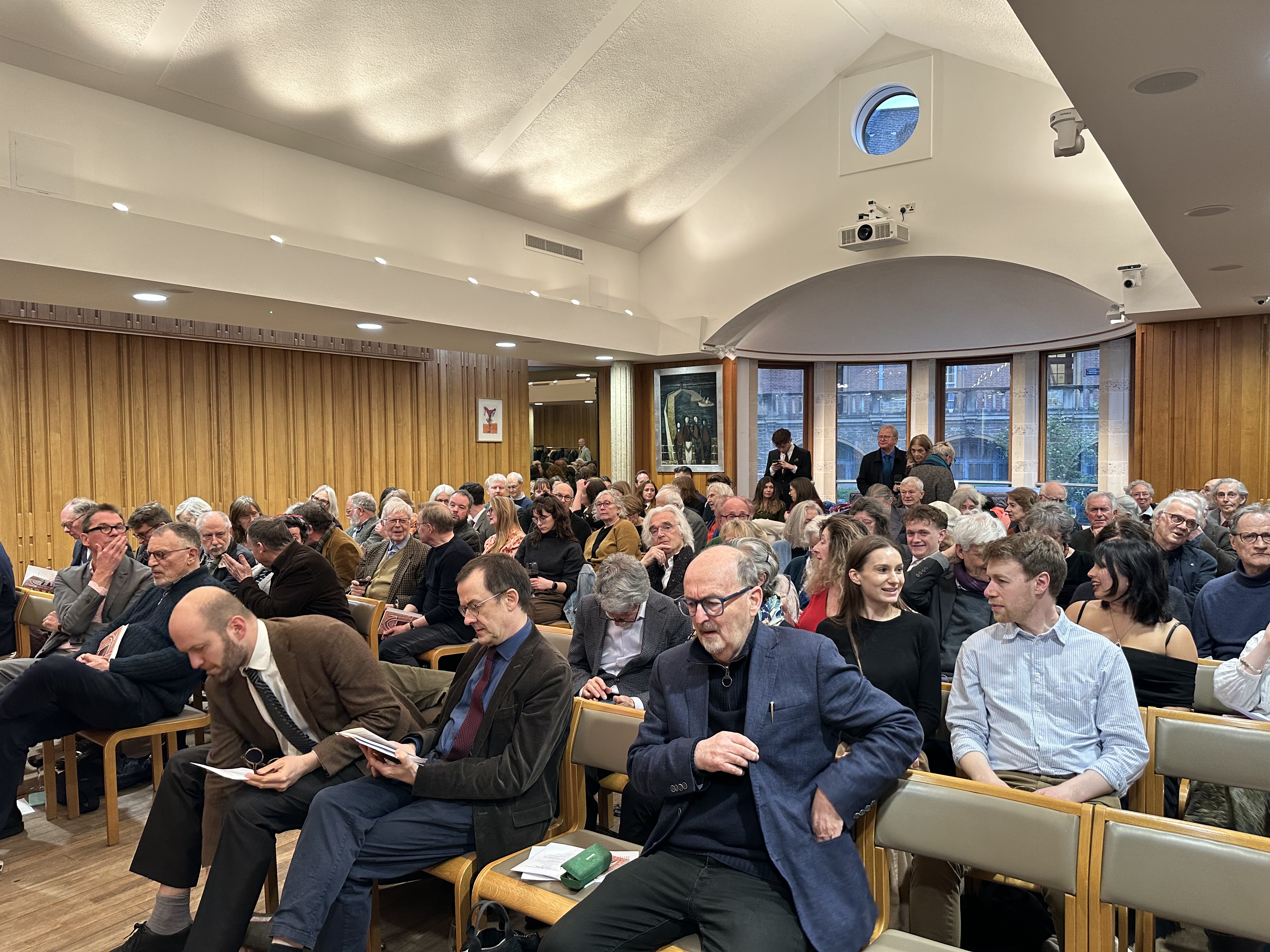
COMMENTS MADE BY PETER CARPENTER IN CAMBRIDGE ON 15TH MARCH 2026.
It’s been a great joy to publish Clive’s work. Worple started out with The Falls just over 25 years ago, a collection that contains, arguably, one of his greatest single pieces, the title poem. I read this at the memorial service last March in Sidney Chapel.
We had put together that manuscript on the floor of a room in Merton College, Oxford, where I was on study leave at the end of 1999. Some of you were there at the launch in Heffer’s all those years back.
His final collection, Architecture and Other Poems, was put together to honour a promise. We had exchanged emails and talked about it in the weeks prior to Clive’s sudden and untimely death. We had debated and then agreed upon the contents and, most importantly, the structure of the collection, putting the sequence ‘Architecture’ at the book’s centre.
Now, over to Clive. These are his words about his final work.
Paradise is real – not just a dream we work or hope for, not a fantasy,
but part of our lived experience, perhaps at the root of that experience.
It is easily disrupted, broken or lost, so representations of it are often
poignant and sometimes haunted by tragedy.
Architecture and Other Poems is a book about paradise, and
therefore has its poignant or tragic moments. It is dominated by two
sequences.
‘Urban Pastorals’ consists of seven pieces of lyrical prose which look at
the poet’s South London childhood through the lens of pastoral poetry.
They evoke an Arcadia touched with irony.
‘Architecture’ is a fragmentary narrative spread across forty-one sonnets,
which tells the story of a young poet and architect at the time of the Arts
and Crafts movement.
It is a tale of youthful idealism, love and friendship erased by
the orgy of self-harm we call the First World War, and it has messages
for a generation facing climate change and further conflict. The book
also includes a selection of ten lyrics which echo in different ways the
themes of the sequences.
Here’s part of a piece from Urban Pastorals
The end of Tooting Bec Common
London in 1950 was Victorian. The Gothic Revival churches. The rag
and-bone men with their horse-drawn carts. The public drinking
fountains and the Public Libraries, with autodidacts searching for hidden
treasures. There were Socialist Ministers in pin-striped trousers, whose
lexicon was Morris and John Ruskin. They wanted to build a paradise on earth. They laboured. They did their best.
Epigraphs for Architecture
Till we have built Jerusalem
In England’s green and pleasant land
William Blake
When we build, let us think that we build for ever. Let it not be for present delight, nor for present use alone; let it be such work as our descendants will thank us for, and let us think, as welay stone on stone, that a time is to come when those stones will be held sacred because our hands have touched them, and that men will say, as they look upon the labour and wrought substance of them, “See! this our fathers did for us.” John Ruskin
The collection is dedicated to his Friends in the Guild.
Here’s the opening sonnet (first 14 of 574 lines) in the 41 sonnet sequence that is the collection’s centre.
OBITUARY
Ernest Hart-Haskell was an architect.
His frame was rendered disarticulate
One summer afternoon beside the Somme:
A shell exploded, and his vital sum
Was redistributed through slime and mud/
And the clogged waters poisoned by the dead.
Had his parts germinated, had they grown/
Among those vines and roses, we’d have known
A golden age of beauty intertwined
With justice. But his richly rifted mind
Was parted from the skilful hand and eye.
Can inwardness survive when organs die?
Can the pure spirit and the graver heart/
Live when the world they work through’s blown apart?
The final poem in the collection seems a fitting place to end. Its masterly control of form, its integrated echoes of Keats (Ode on A Grecian Urn), Shakespeare (The Tempest) and others, even Alexander Pope (from his Essay on Man: ‘Whatever is, is right…’) and its preoccupations (the redemptive power of art among them), all of that --- in one achieved quatrain that marks an ending. Built to last, like Clive and his legacy.
DAWN CHORUS
The intervals are disproportionate.
The different melodies are overlaid.
No harmony – and yet the sounds are sweet,
And of this discord all that is is made.
Other Readers
Clive Wilmer’s poetry has always meant a lot to me – for its unfaltering clarity, for its delicacy of execution and weightiness of statement and for its faithfulness to subject matter, without attitudinising or lies.
Thom Gunn
It is refreshing to encounter a poet who places expression above self-expression, who has become so inward with his language that patterns and prosody appear effortless, while in fact being carefully wrought.
Hilary Davies
These poems... breathe an unfashionable, utterly English faith in the language’s passionate reticence.
Ruth Padel
… boldly lyrical, broad in reference, felicitous in the craft of verse…Unmissable.
Elizabeth Jennings
Peter Carpenter 30.03.2026